Rajiv Gandhi Zoological Park as a System
Systems Thinking - RGZP
COMPANY
MIT-ID
ROLE
UX/UI Designer
EXPERTISE
Systems Thinking
YEAR
2023
About
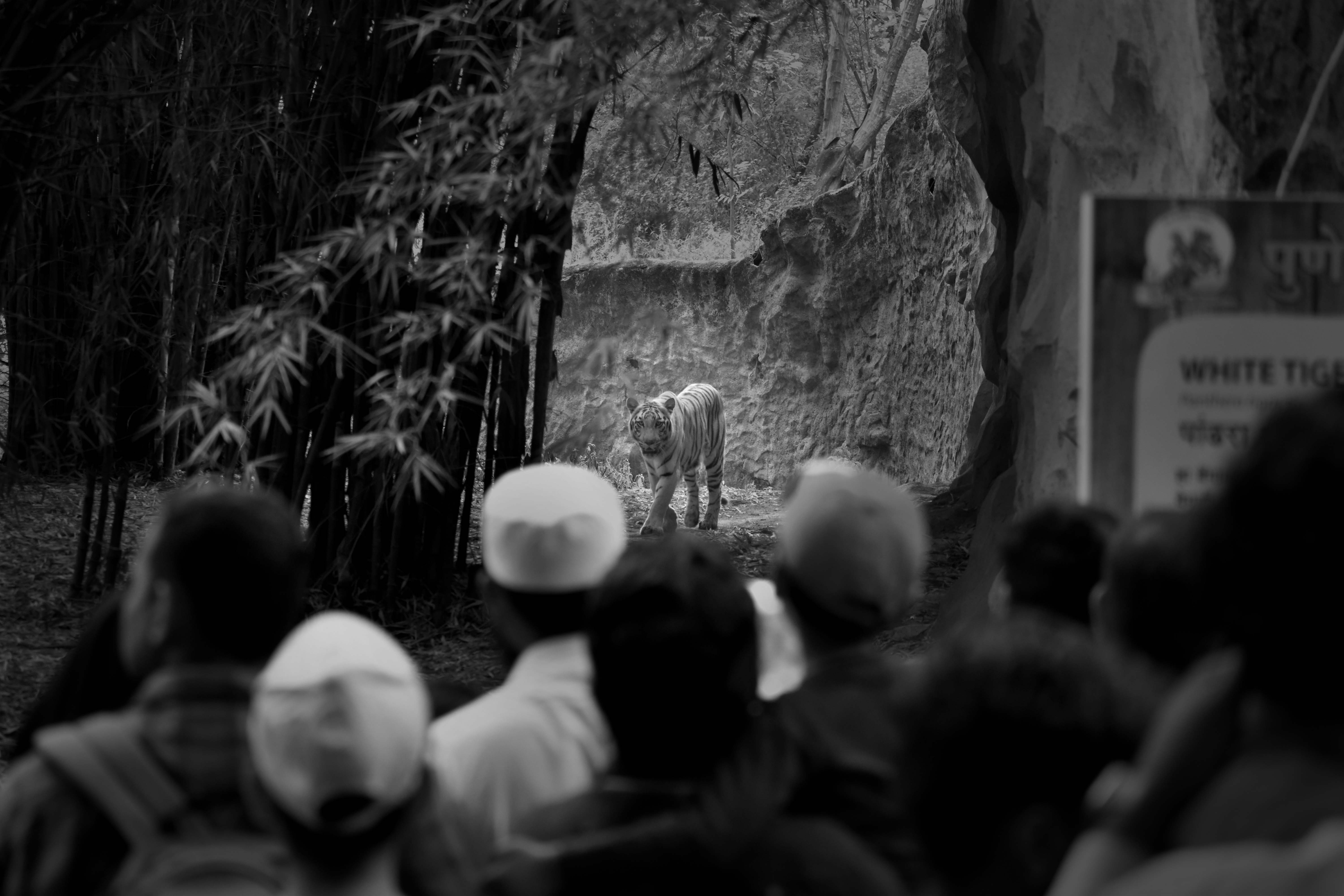
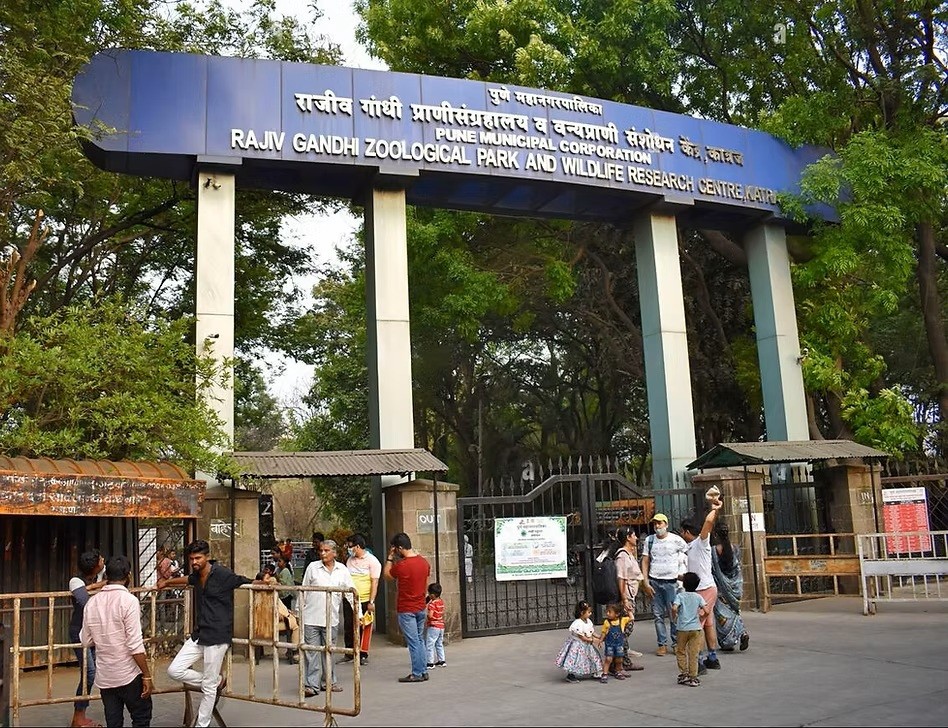
Rajiv Gandhi Zoological Park, commonly known as the Rajiv Gandhi Zoo, is a popular zoological park located in Pune, Maharashtra, India. Established in 1999, the zoo is named after the former Prime Minister of India, Rajiv Gandhi and spans an area of approximately 130 acres.
Overview
This project explored Rajiv Gandhi Zoological Park as a complex interconnected system made up of ecological, operational, social and visitor-facing relationships.
The objective was to understand how the zoo functions beyond being a physical place; looking at the relationships between animals, caretakers, visitors, infrastructure, education, conservation and management.
Aim
Through a systems-thinking approach, the project aimed to uncover hidden challenges and opportunities that could improve both visitor experience and the wellbeing of the ecosystem, while supporting conservation awareness through meaningful interventions.
Process
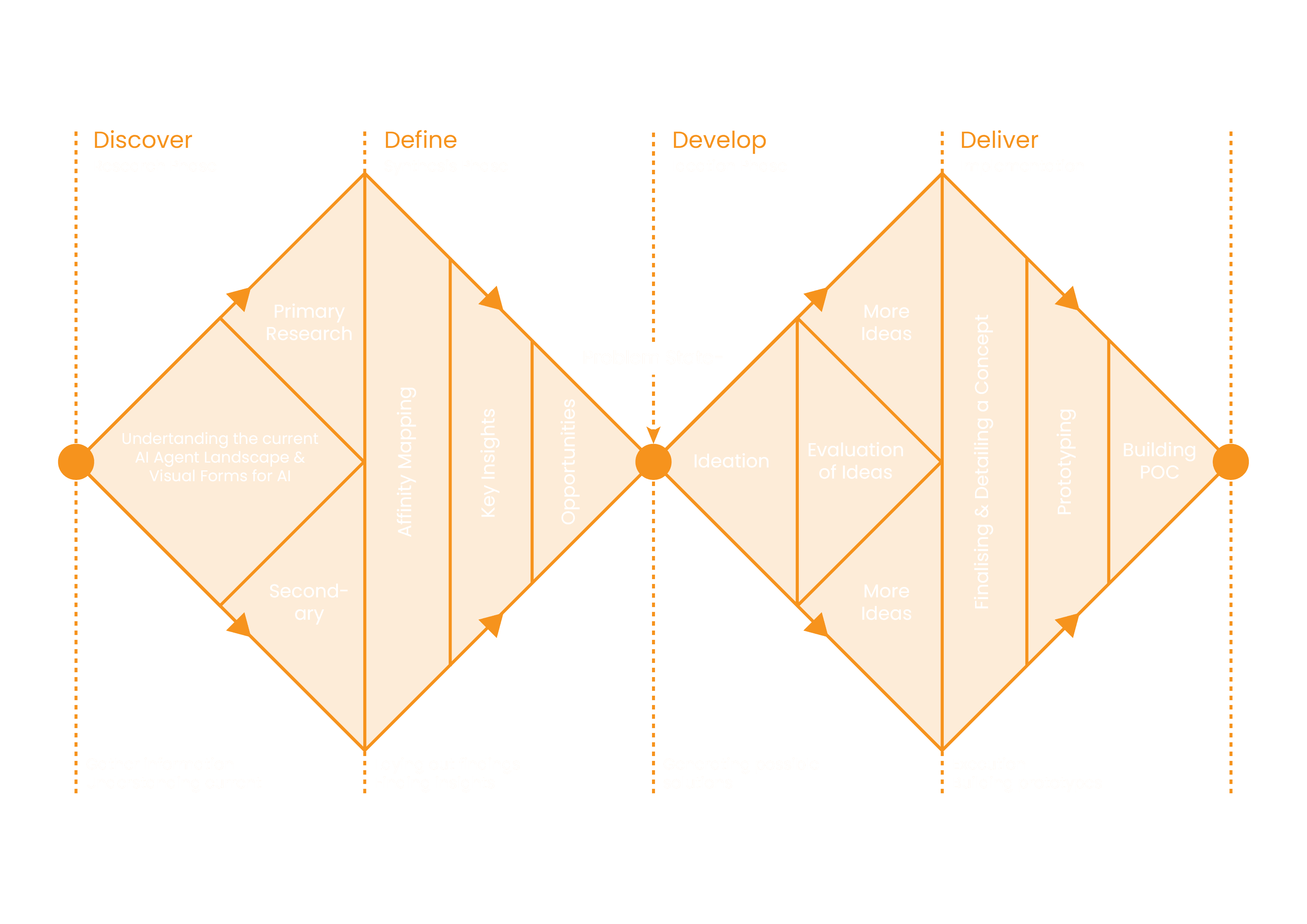
The project followed a systems-led research and design methodology focused on understanding relationships, identifying pain points and designing interventions at multiple levels within the zoo ecosystem.
Secondary Research
Studied zoo ecosystems, visitor experience design, conservation initiatives, and systems thinking methodologies to build domain understanding and identify existing challenges.
Primary Research
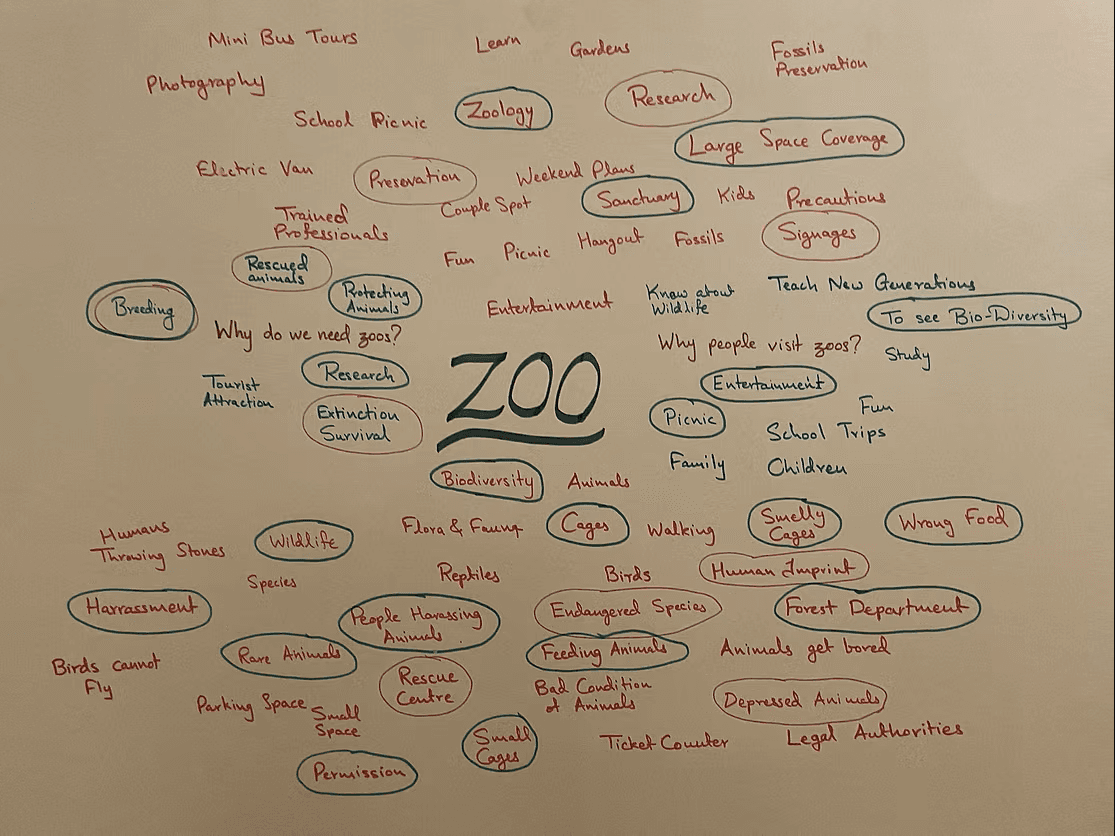
Conducted site visits, observations, and contextual inquiry to understand visitor behavior, movement patterns, and interactions within the zoo environment.
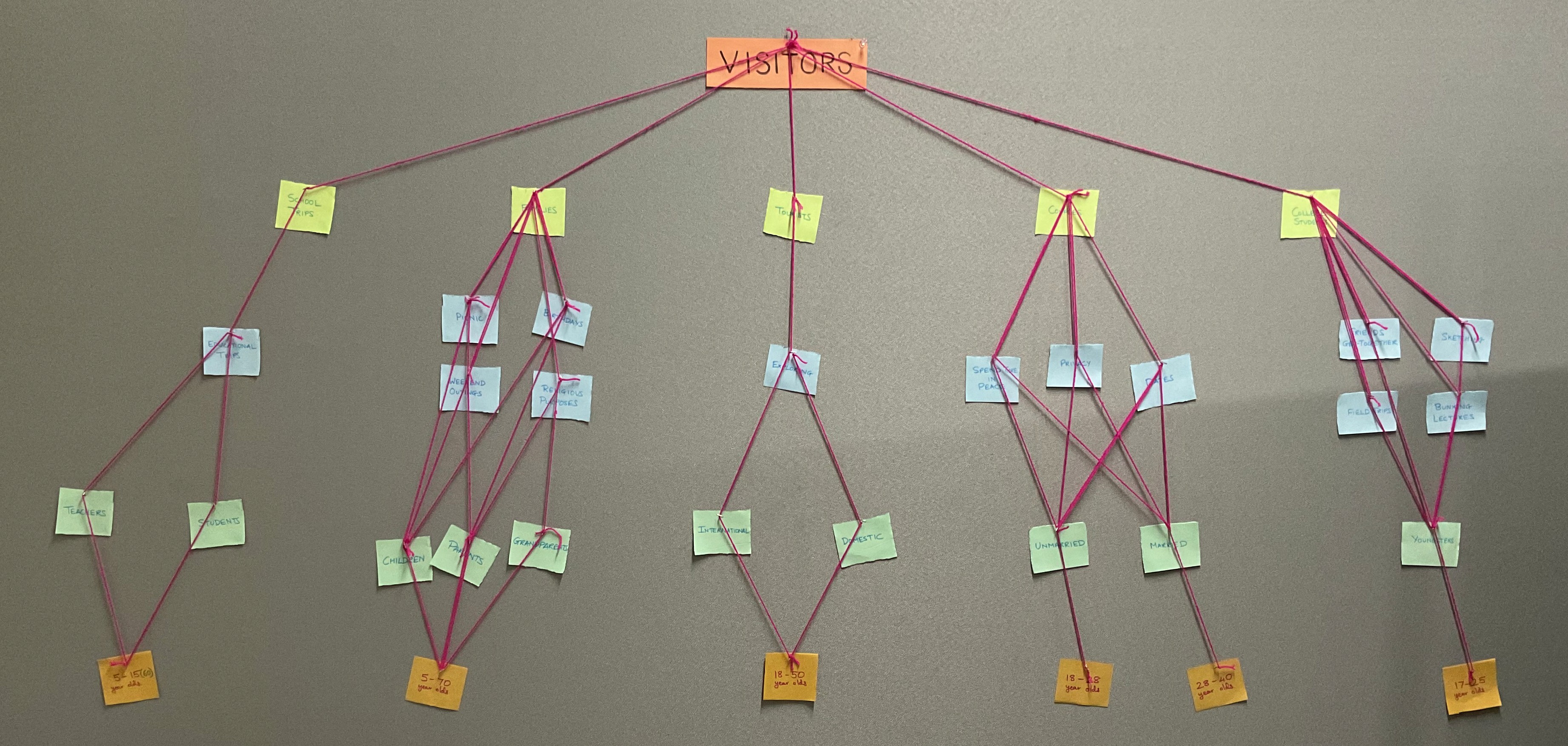
Stakeholder Mapping
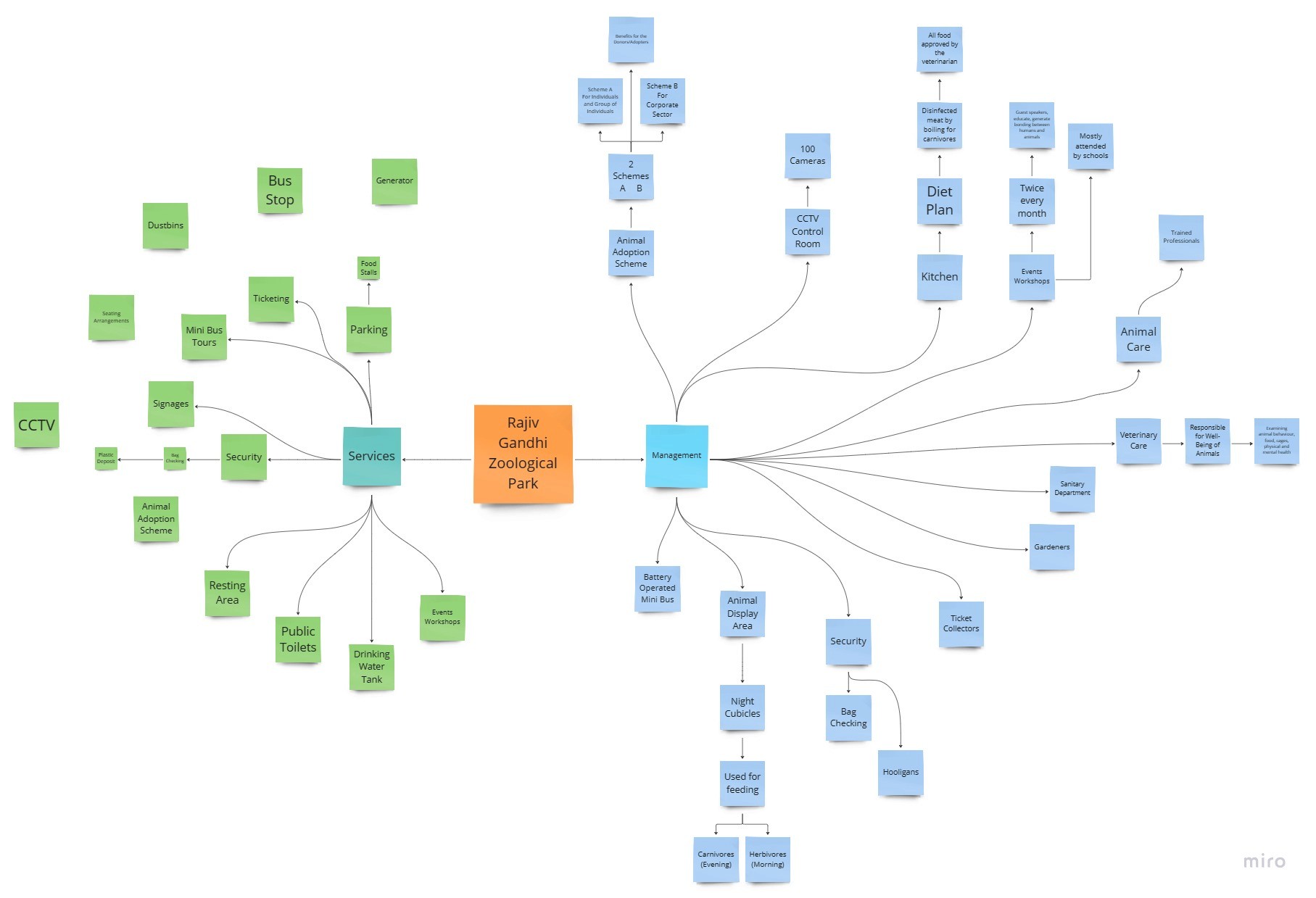
Mapped relationships between visitors, animals, zoo staff, management, and supporting systems to understand dependencies and influences.
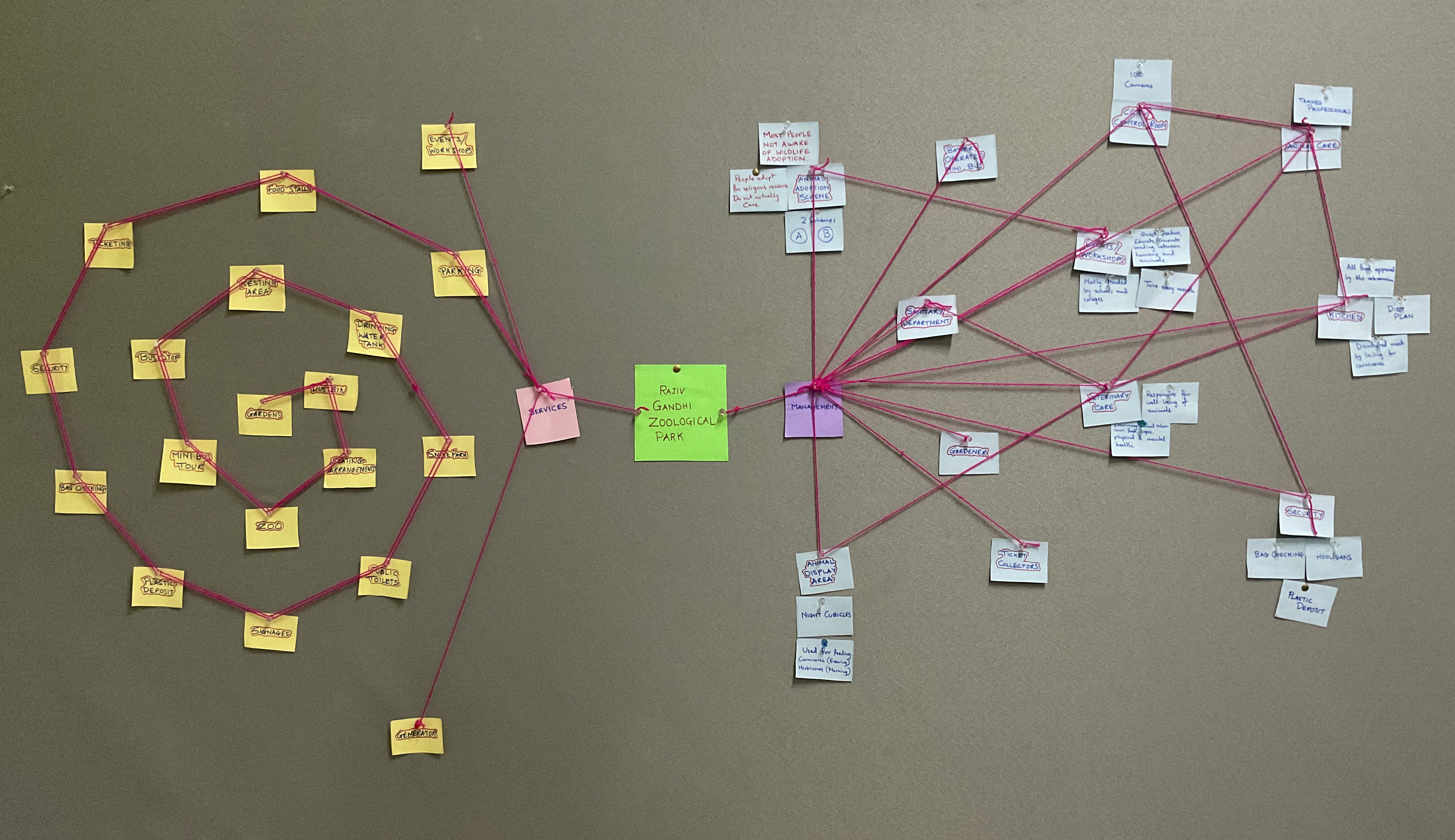
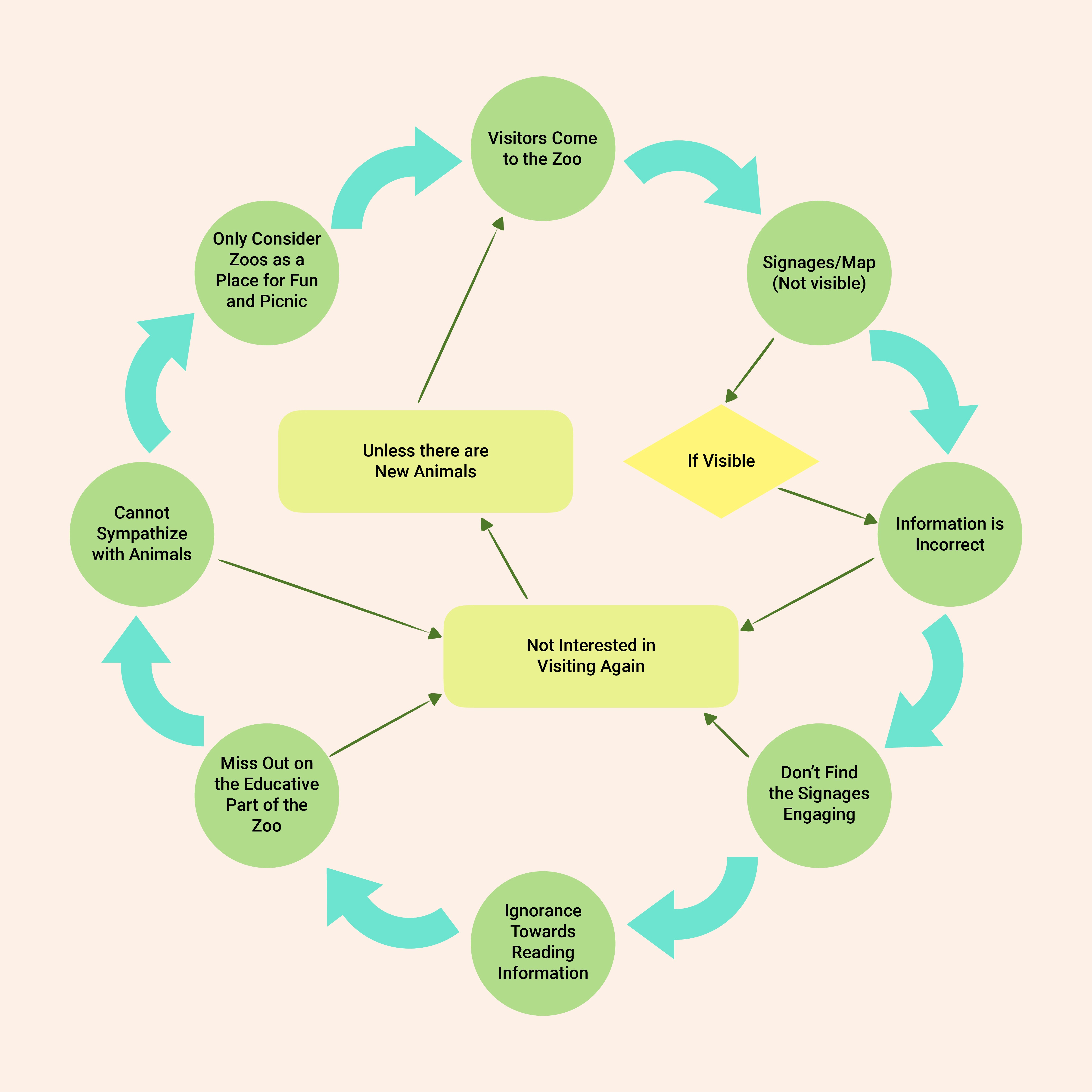
Systems Analysis
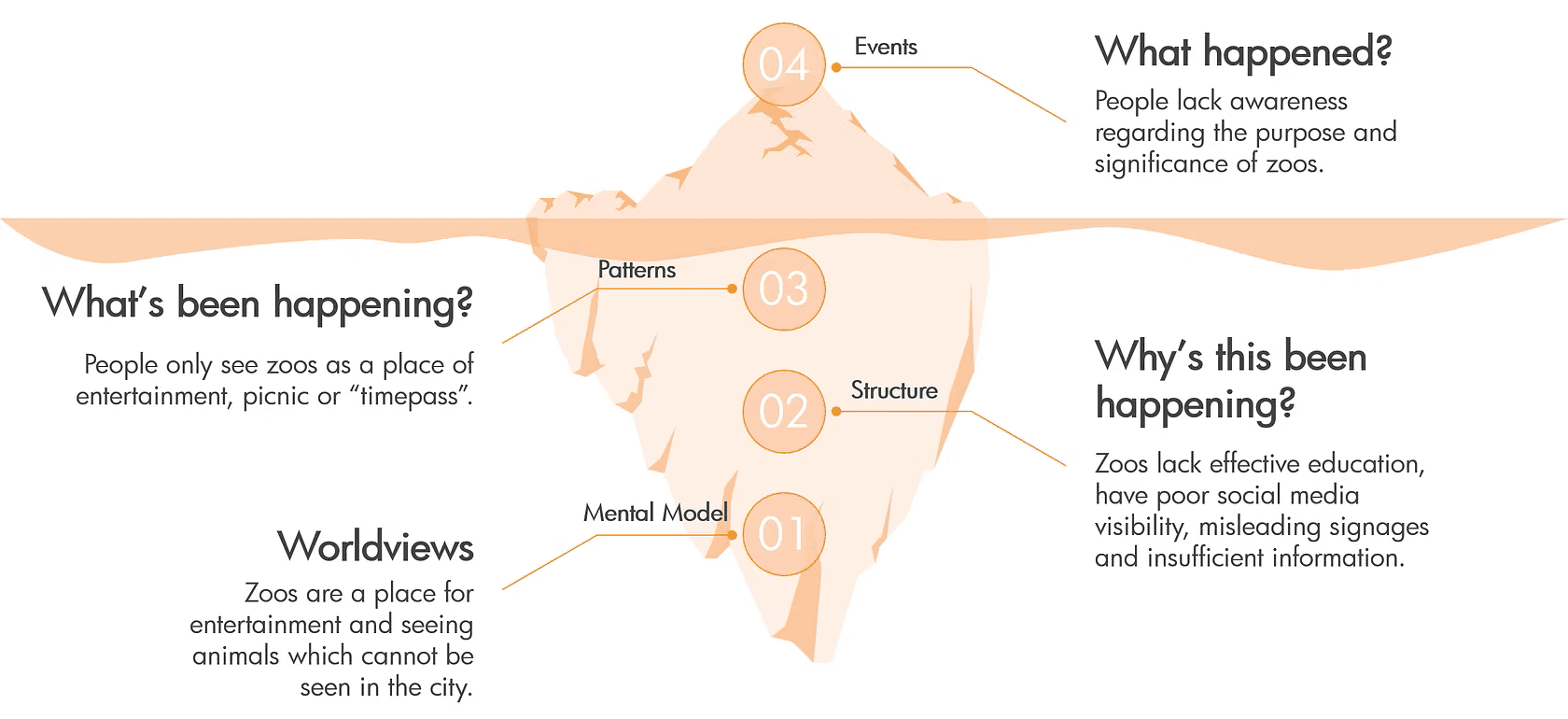
Used systems maps, feedback loops, and the Iceberg Model to uncover root causes and identify leverage points for intervention.
User Understanding
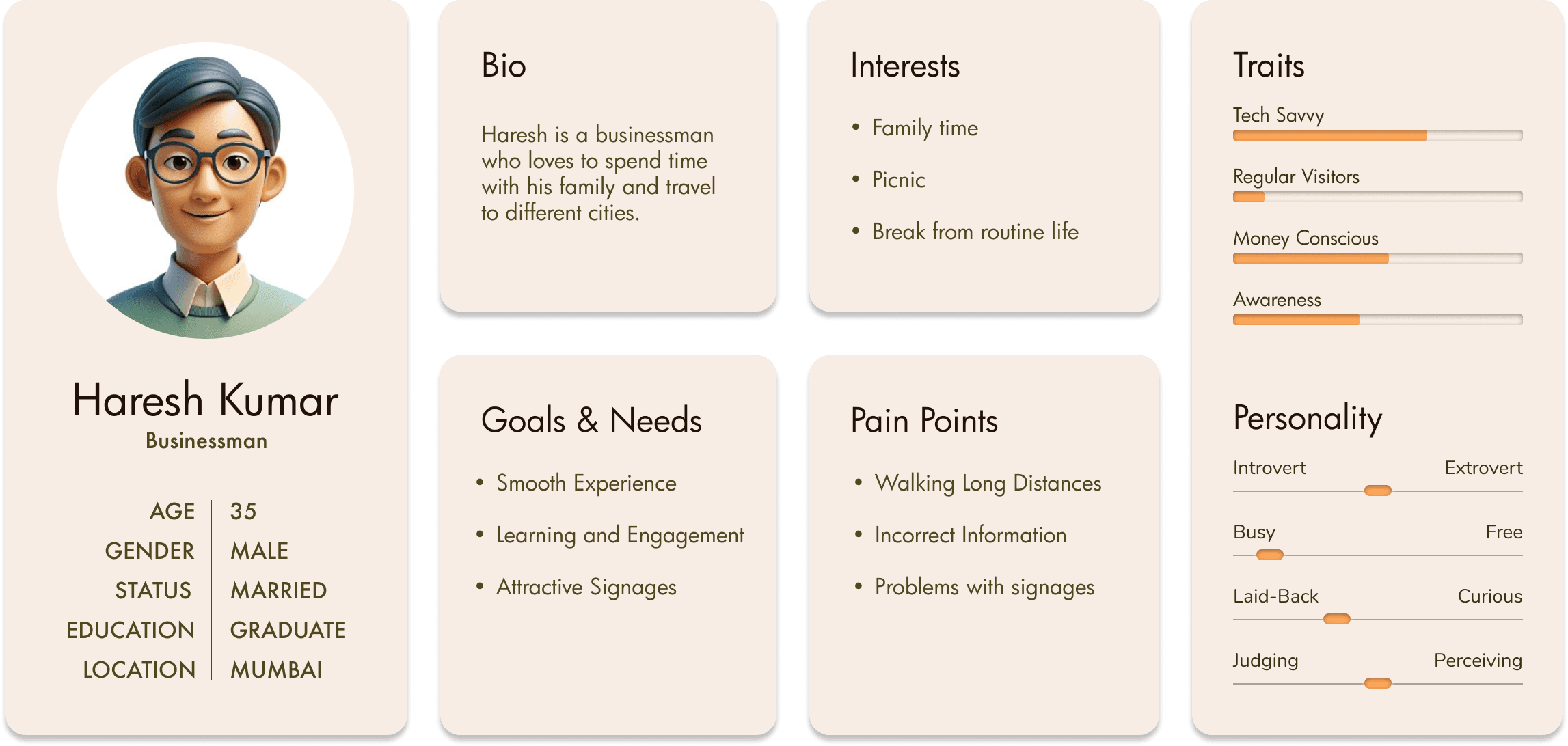
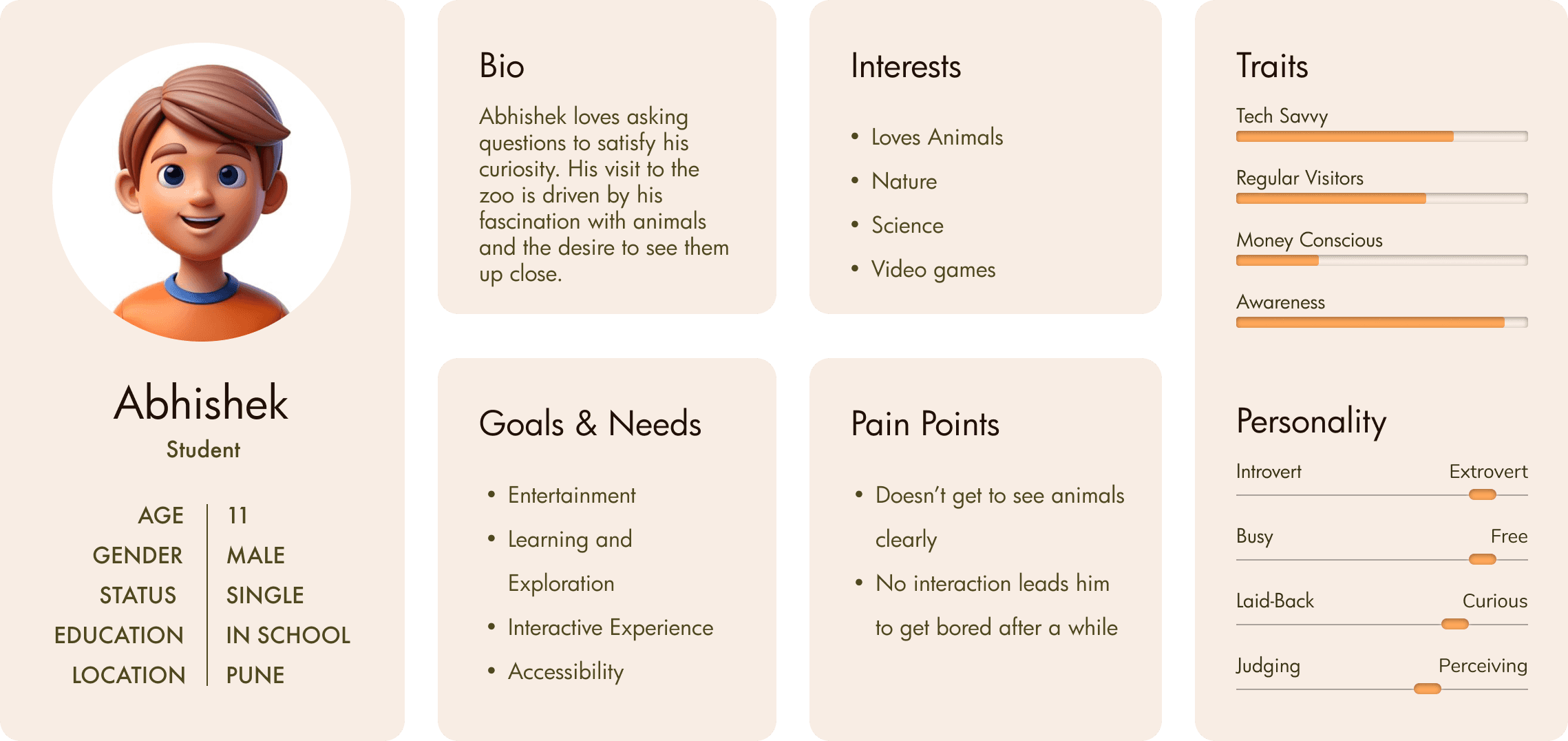
Developed personas and synthesized behavioral insights to better understand visitor motivations, needs, and pain points.
Opportunity Identification
Translated research findings into strategic opportunity areas focused on engagement, education, accessibility, and conservation awareness.
Solutions
A collection of strategic and experience-led interventions designed to improve engagement, education, and awareness within the zoo ecosystem.
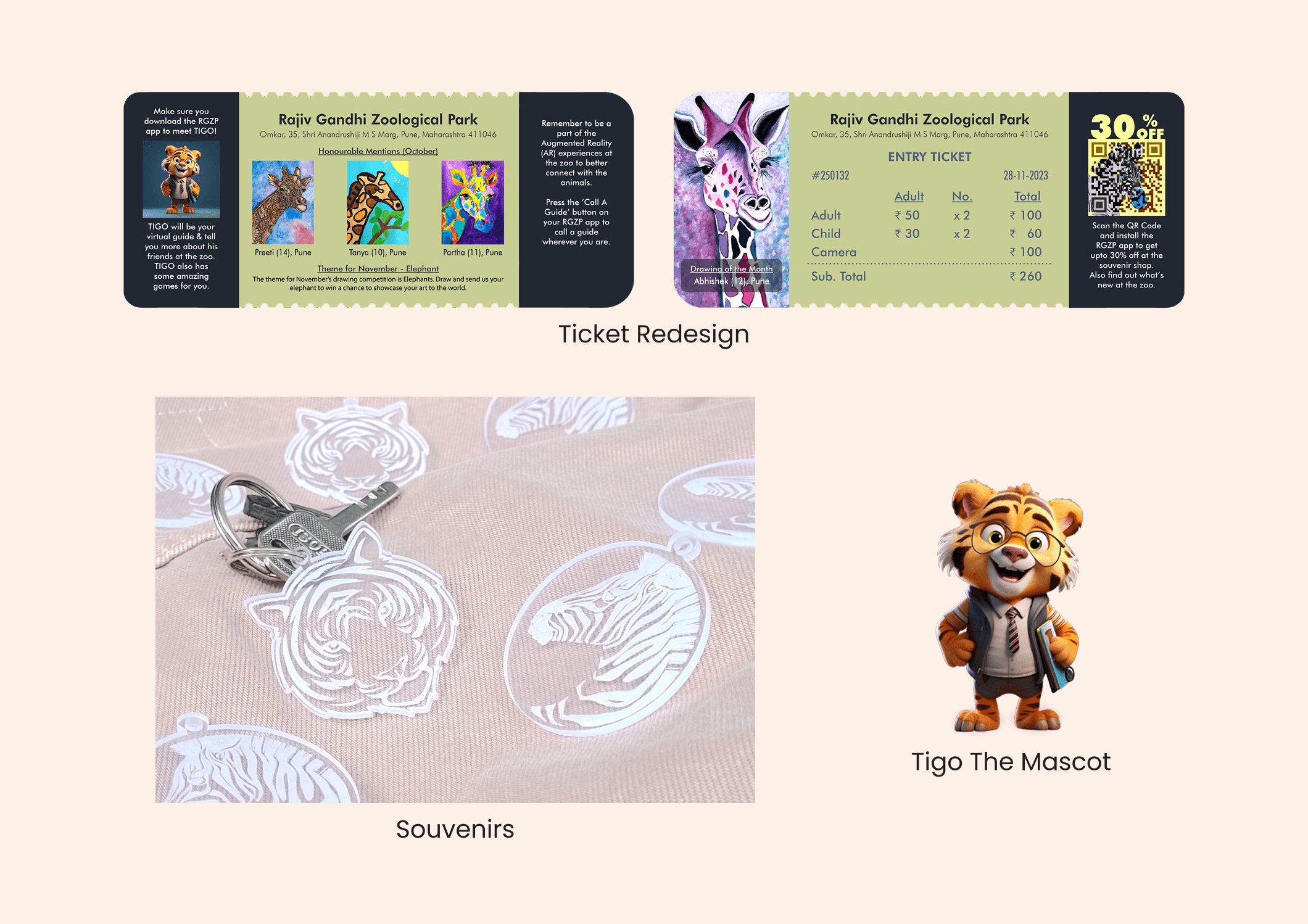
Entry Tickets Redesigned to be a Collectible
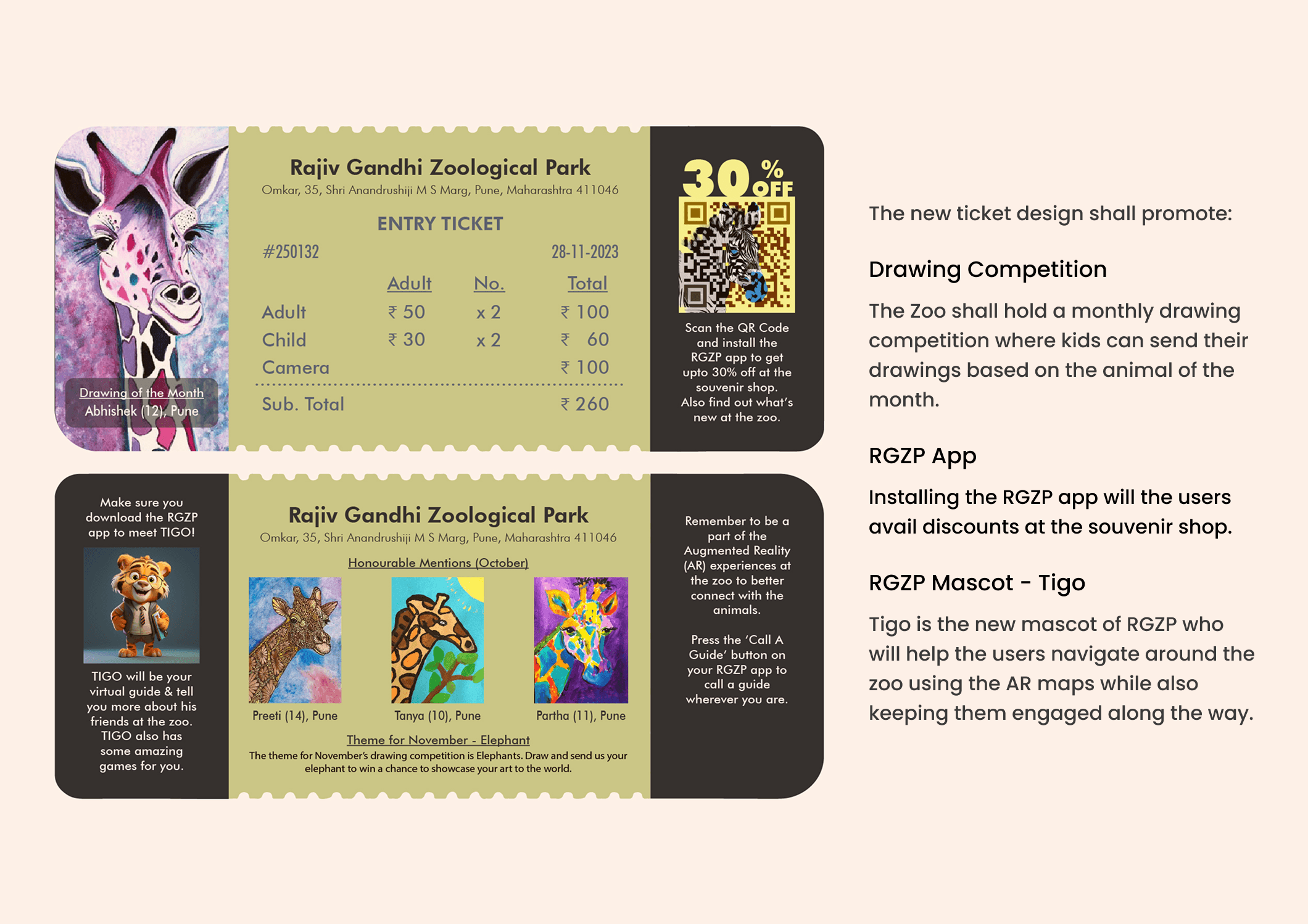
The new ticket design shall promote:
Drawing Competition
The Zoo shall hold a monthly drawing competition where kids can send their drawings based on the animal of the month.
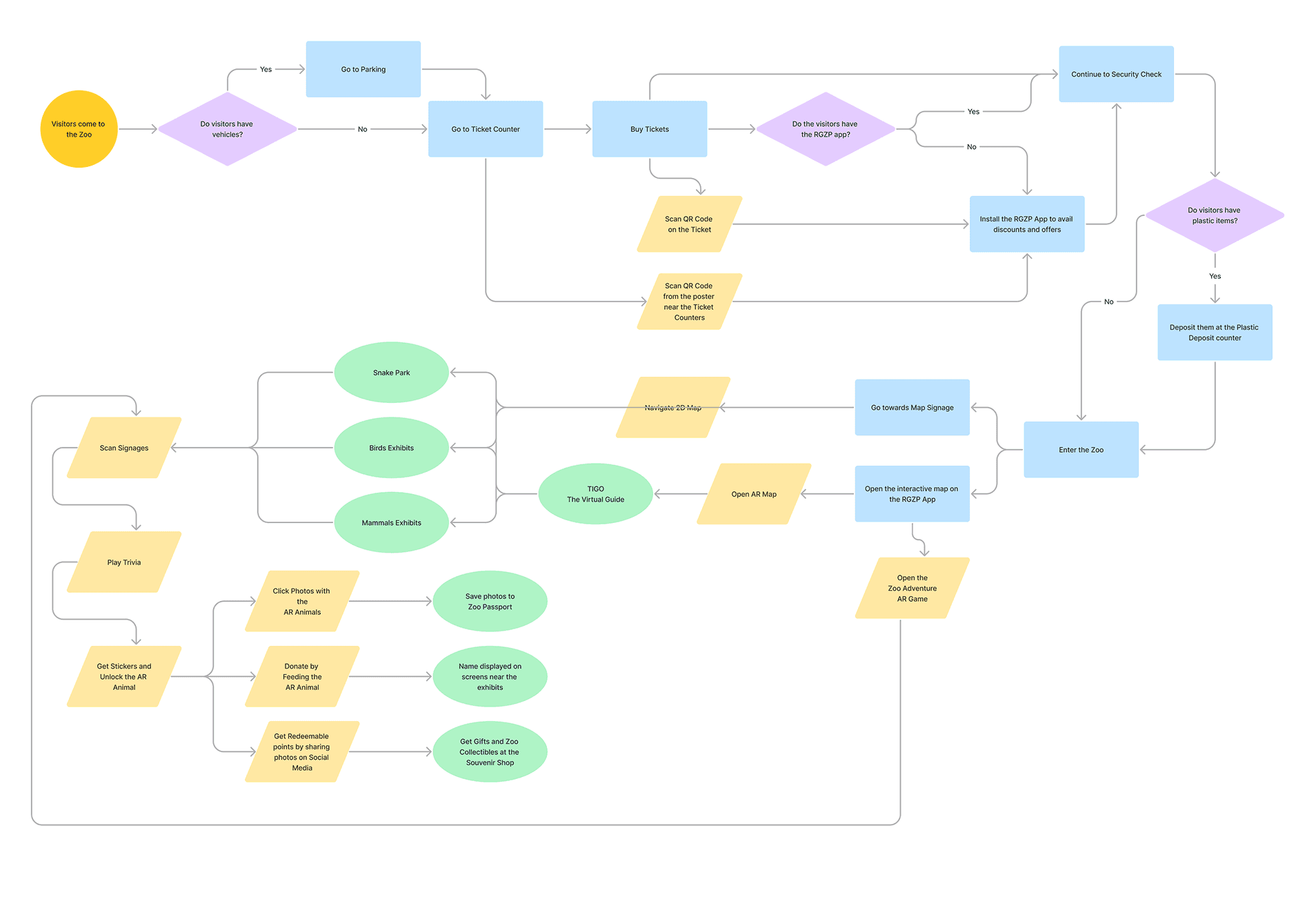
RGZP App
Installing the RGZP app will the users avail discounts at the souvenir shop.
RGZP Mascot - Tigo
Tigo is the new mascot of RGZP who will help the users navigate around the zoo using the AR maps while also keeping them engaged along the way.
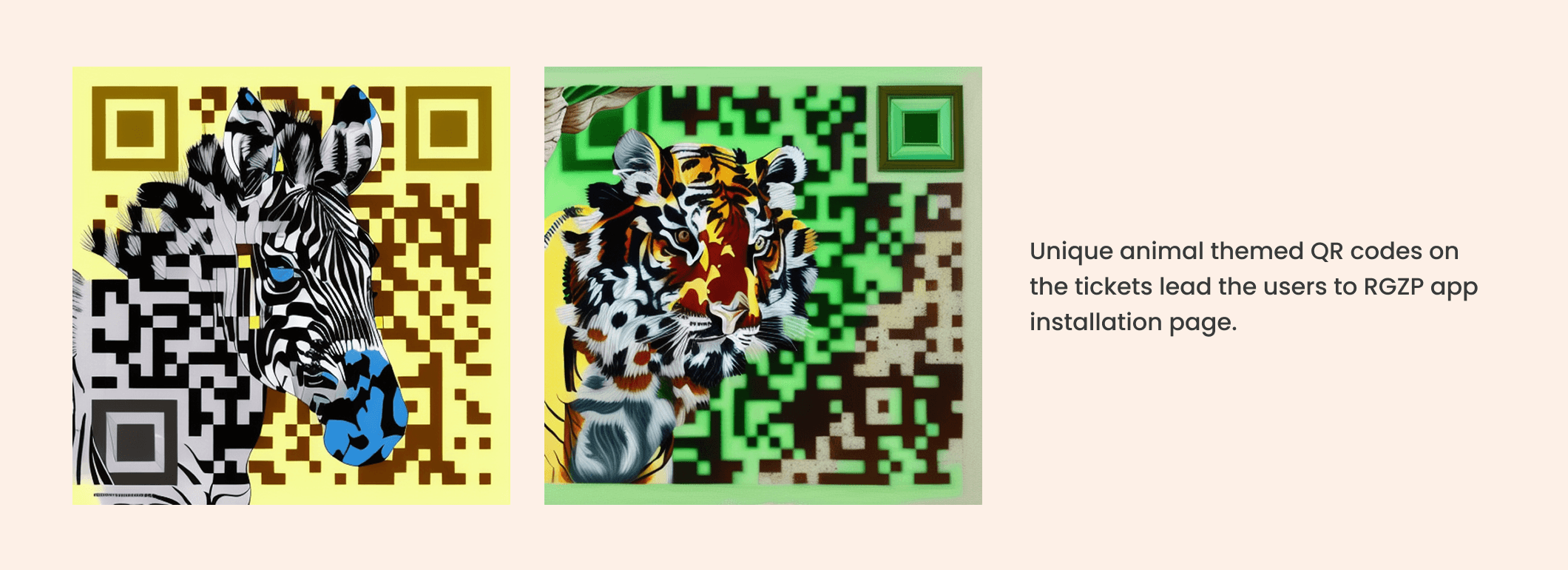
Unique Themed QR Codes
Unique animal themed QR codes on tickets lead the users to App installation page.
RGZP App
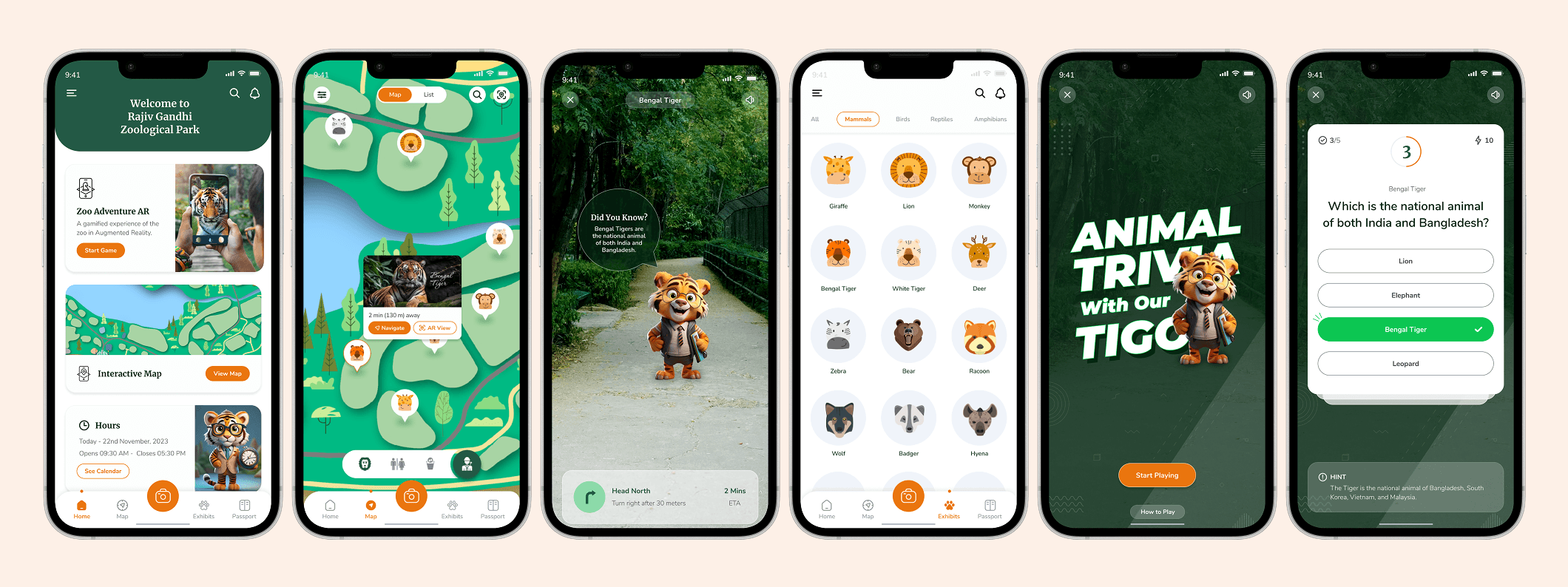
The RGZP app features:
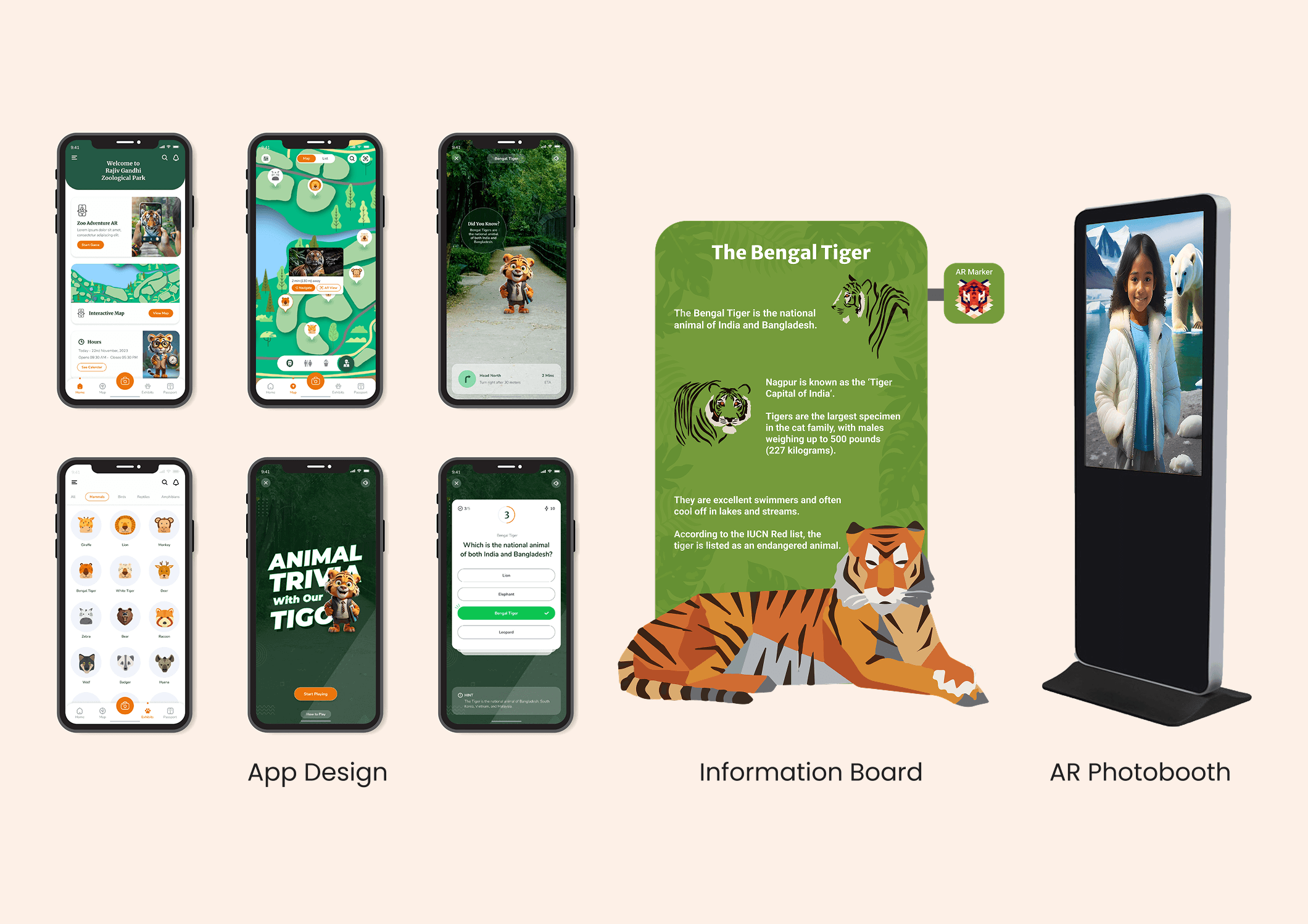
Zoo Adventure AR
"Zoo Adventure AR" is an interactive game designed for children visiting the zoo. It combines AR technology and photography to engage and educate young visitors about the various animals in the zoo. The children will play quiz games and unlock AR animals to click photographs with. Sharing photos on social media will earn them unique stamps on their passports.
Interactive Map
Users can access the RGZP map to navigate around the zoo. The map also features AR mode in which the mascot 'TIGO' guides them around the zoo. TIGO knows his way around and also knows all the animals there. He will share interesting information about them along the way.
RGZP Events Calendar
The app will feature a section which will display all the events planned at the RGZP in the future.
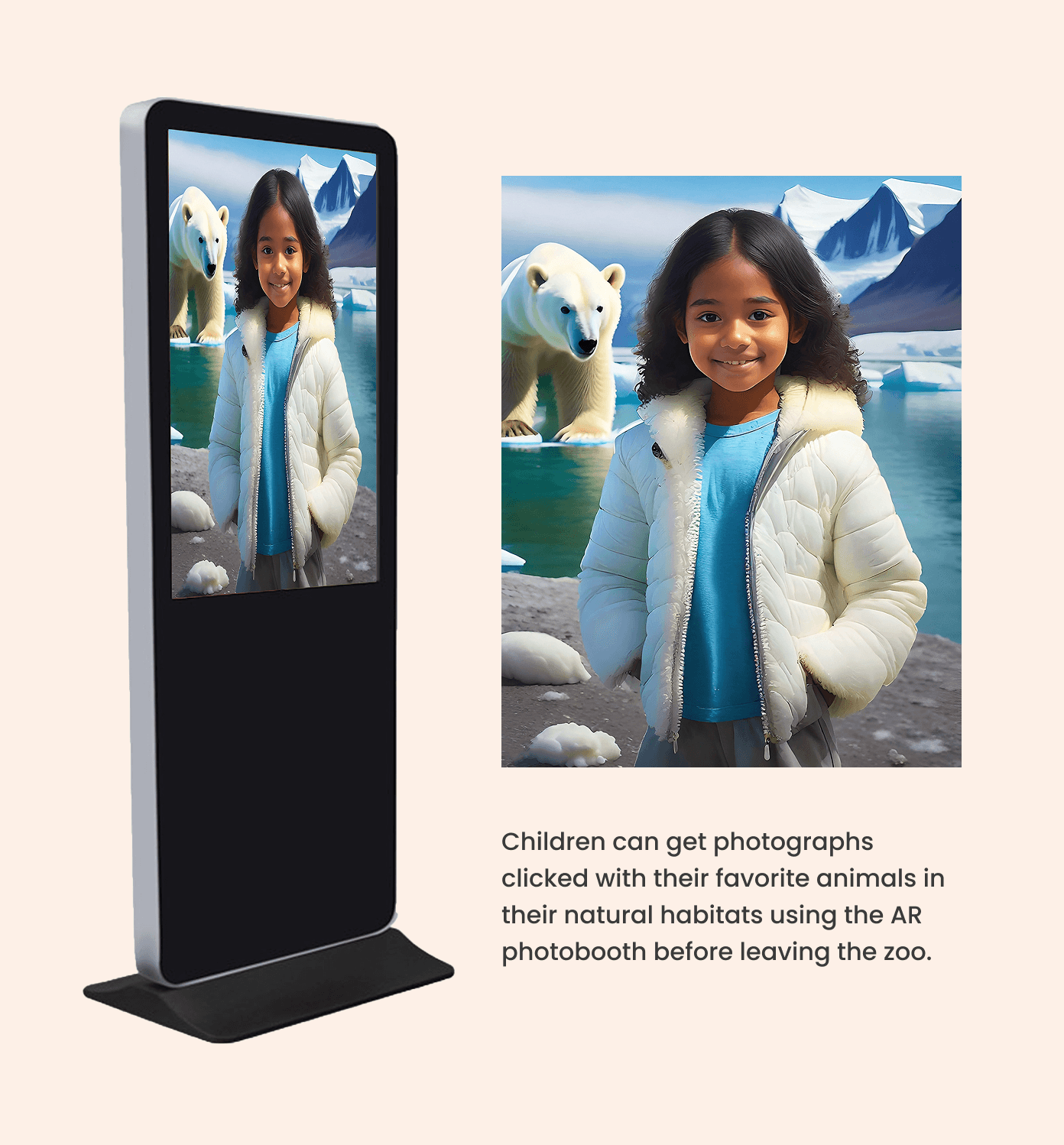
AR Photobooth
Souvenirs

Insights
Many visitor challenges originate from systemic relationships rather than isolated touch-points.
Understanding stakeholder interdependencies reveals opportunities that traditional research may miss.
Small interventions can create broader impact across complex systems.
Systems thinking helps shift design decisions from symptoms to root causes.