Generative UI for XR Glasses
Dravya AI (NDA)
COMPANY
Incerro
ROLE
XR Strategist
EXPERTISE
XR Research & Design
YEAR
2026
Project Description
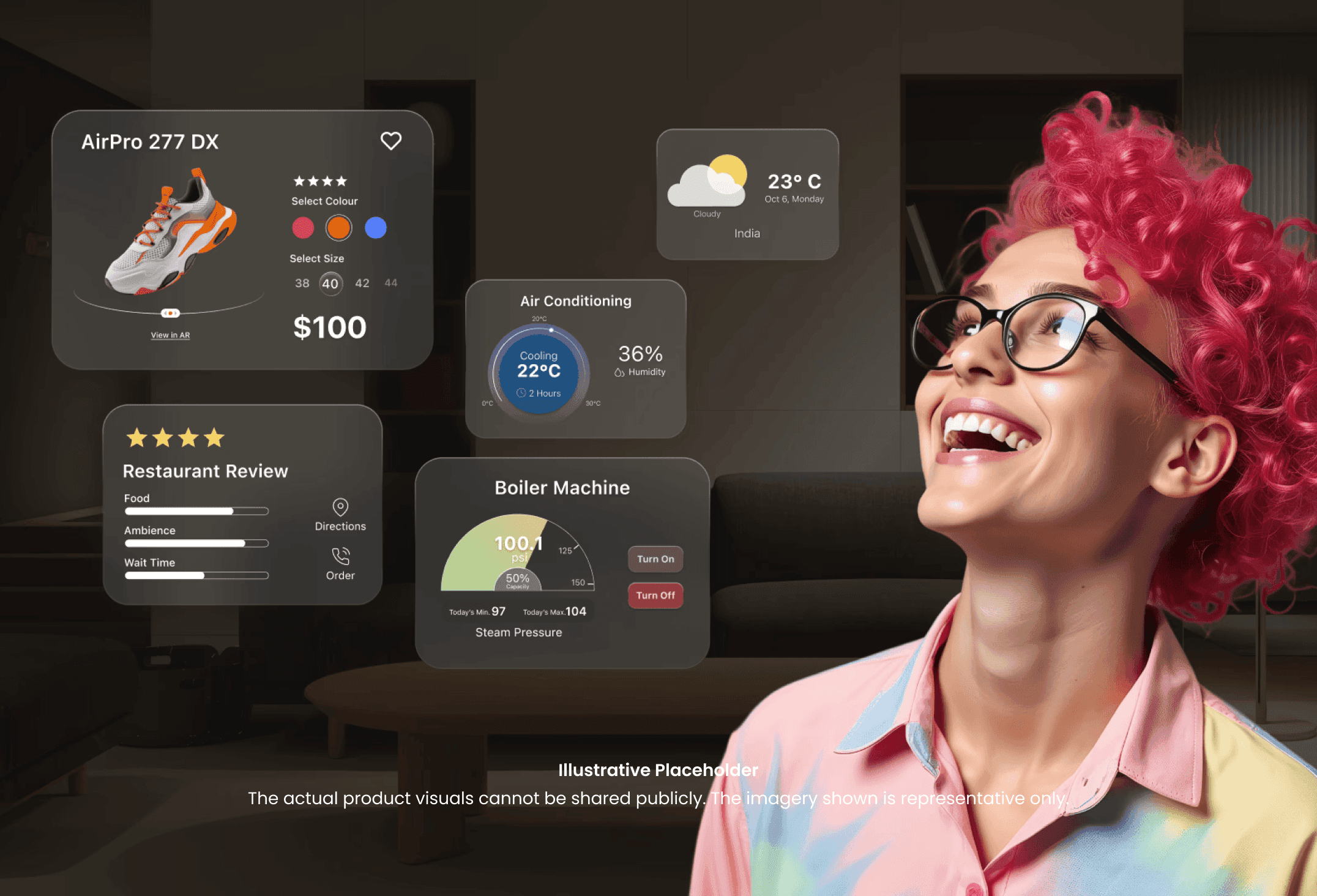
Dravya AI explored how existing digital products can transition into the era of XR without requiring companies to redesign their applications from scratch.
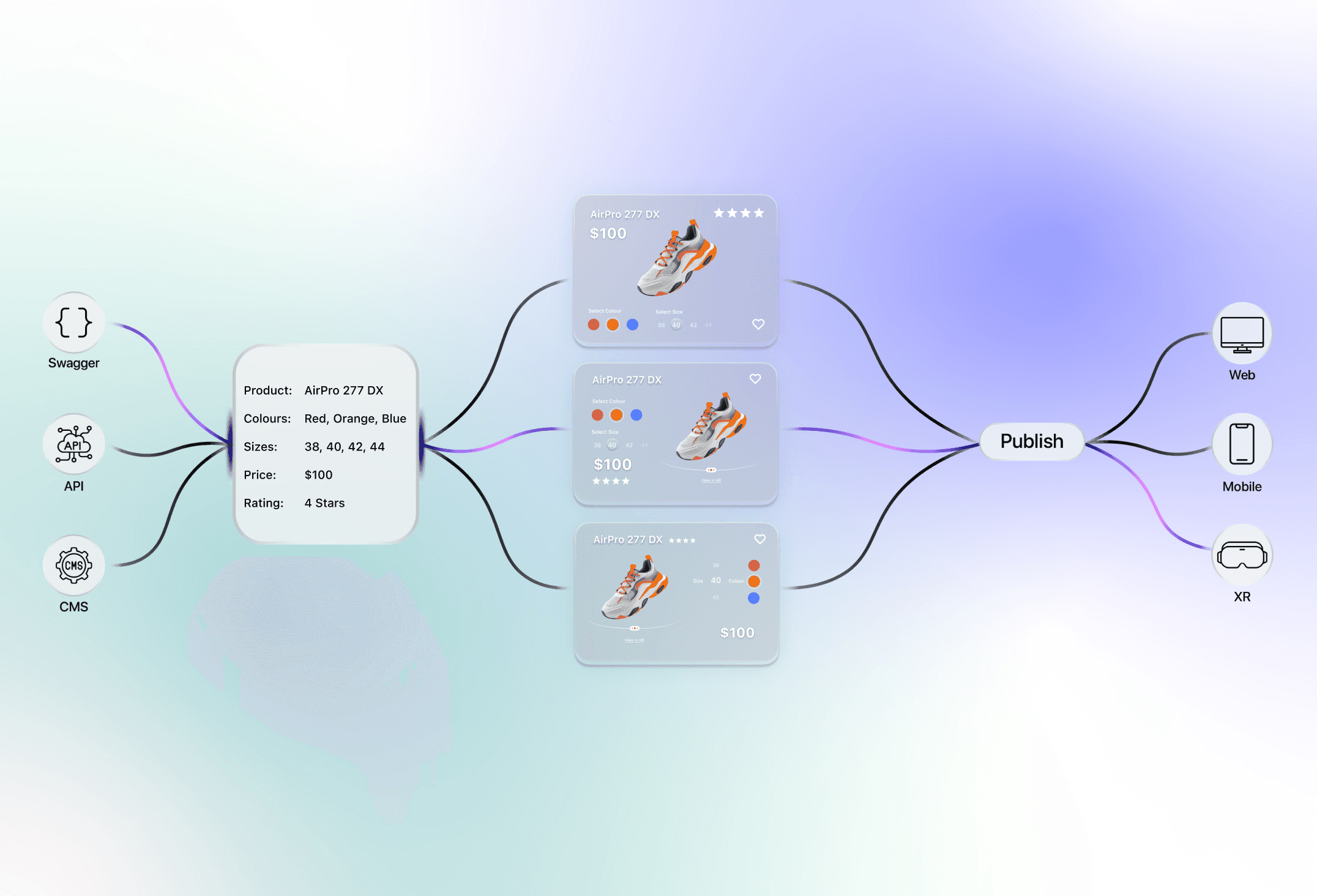
The platform was envisioned as a bridge between traditional software and smart glasses, allowing organizations to connect their existing applications, websites and backend systems and automatically generate XR-optimized interfaces.
My role focused on defining UX principles, interaction paradigms, and design frameworks that could guide how information should be adapted and presented on future Android XR devices.
Process
XR Platform Research
Studied Android XR, smart glasses, and wearable computing to understand the constraints and opportunities of XR-first interfaces.
Interface Adaptation Analysis
Explored how existing mobile and web experiences could be transformed into glanceable and ergonomic smart-glasses interfaces.
Human Factors & Ergonomics
Analyzed information density, field of view, attention management and interaction constraints unique to wearable XR devices.
Design Principles
Defined guidelines for adapting traditional applications into usable XR experiences.
Solution
XR Adaptation Framework
Defined a framework for transforming existing mobile and web experiences into XR-ready interfaces for smart glasses.
Smart Glasses UX Patterns
Established design patterns for glanceable information, contextual interactions, and lightweight workflows tailored to wearable XR devices.
Information Prioritization
Developed principles for determining what information should be surfaced, when it should appear, and how it should be presented in XR.
Platform Design Guidelines
Created UX frameworks and interaction principles to enable consistent adaptation of applications across future Android XR devices.


Insights
XR Is Not a Smaller Screen
Interfaces cannot simply be scaled down from mobile or desktop experiences. Smart glasses require entirely different approaches to information presentation and interaction.
Glanceability Is Critical
Users should be able to understand information within seconds. Every element must justify its presence within a limited field of view.
Context Determines Relevance
The value of information depends heavily on user context, environment, and current activity. Timing can be as important as the information itself.
Less Interface, More Assistance
The most effective XR experiences prioritize surfacing the right information at the right moment rather than exposing full application interfaces.
Consistency Requires Guardrails
As applications adapt to XR, clear design principles and behavioral constraints become essential for maintaining usability and predictability.
Project Status
The initiative was paused due to dependencies on the evolving Android XR ecosystem. Despite this, the project generated valuable insights into XR interface adaptation and future smart glasses experiences.