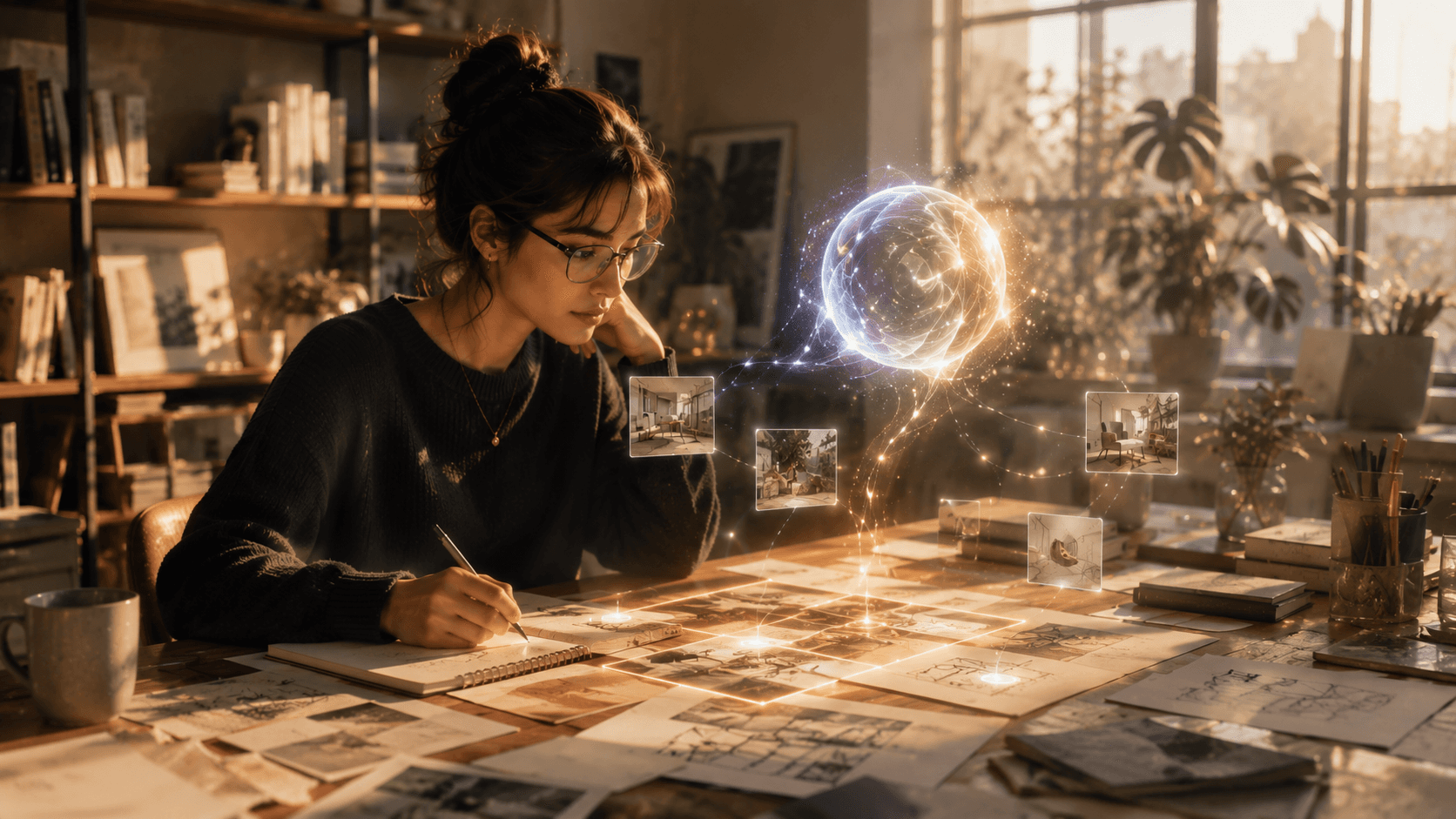
The Fundamental Difference Between UX Design and XR Design
As immersive technologies continue to evolve, a common question emerges among designers, product teams and organizations:
What makes XR design different from traditional UX design?
At first glance, the two disciplines appear closely related. Both aim to create meaningful user experiences. Both involve understanding user needs, designing interactions, reducing friction and helping users achieve their goals.
However, the moment we move beyond screens and into immersive environments, the nature of the design challenge changes fundamentally.
Traditional UX design focuses on how people interact with digital interfaces.
XR design focuses on how people interact with digital experiences within physical space.
This shift may sound subtle, but it changes almost everything about the way designers think, design and evaluate experiences.
Traditional UX Designs for Screens
For decades, digital experiences have existed within a rectangle.
Whether it is a phone, tablet, laptop or desktop monitor, designers work within a clearly defined boundary.
Users interact through familiar methods:
Touch
Mouse clicks
Keyboards
Trackpads
The designer controls almost everything the user sees.
The screen defines the experience.
XR Designs for Space
In XR, the screen disappears.
The interface is no longer confined to a rectangle. Instead, it exists within the user's physical environment.
Suddenly, designers must think about questions that rarely exist in traditional UX:
Where should information exist in space?
How far should content be from the user?
What happens when users walk away?
How should interfaces respond to body movement?
How much physical effort should an interaction require?
How do we prevent fatigue?
The design challenge expands from designing interfaces to designing environments.
Users Are No Longer Looking At an Interface. They Are Inside It.
This is perhaps the most significant difference between UX and XR design.
In traditional UX design, users interact with an interface that exists on a screen.
In XR, users become part of the experience itself.
Their:
Head movement
Hand movement
Eye gaze
Walking patterns
Physical surroundings
all become inputs.
The user's body is no longer separate from the interface.
It becomes part of the interaction system.
As a result, XR designers are not simply designing for attention. They are designing for presence.
Human Factors Become a Core Design Requirement
One of the most significant differences between UX and XR is that digital interactions are no longer purely cognitive; they are physical.
A poorly designed mobile application may frustrate users.
A poorly designed XR experience can physically exhaust them.
Consider a simple button.
On a phone, tapping a button requires almost no effort.
In XR, repeatedly reaching toward floating interfaces can create arm fatigue, discomfort and even cause users to abandon the experience altogether.
This means XR designers must understand:
Ergonomics
Physical comfort
Cognitive load
Spatial awareness
Human behaviour in three-dimensional environments
While traditional UX considers many of these factors, XR places them at the center of the design process.
XR Designers Design Behaviors, Not Just Interfaces
As XR evolves, interactions are moving beyond menus and buttons.
Users may interact through:
Hand gestures
Eye tracking
Voice
Body movement
AI agents
This requires designers to think beyond screens and workflows.
They must design behaviors.
Consider an AI assistant in mixed reality.
A traditional UX designer might focus on the conversation interface.
An XR designer must answer additional questions:
Should the assistant have a physical presence?
Where should it appear?
How close should it stand?
Should it follow the user or remain stationary?
How should it communicate attention?
How should it enter and exit the environment?
These decisions directly influence trust, comfort, social acceptance and emotional connection.
The Future of Design Is Expanding Beyond Screens
As spatial computing becomes more common, the role of design will continue to evolve.
Designers will need to think beyond pixels, layouts and navigation structures. They will need to understand how digital experiences coexist with people, objects and environments in the real world.
This does not mean UX design becomes less important.
Rather, XR design builds upon UX foundations and extends them into entirely new dimensions of interaction.
Conclusion
The fundamental difference between UX design and XR design is simple:
UX design focuses on interactions within a screen.
XR design focuses on interactions within space.
When digital experiences leave the boundaries of a display and become part of a user's environment, new considerations emerge; presence, embodiment, ergonomics, spatial awareness, movement and behaviour.
Designing for these experiences requires more than adapting existing UX patterns.
It requires understanding space itself as a design medium.
As computing moves beyond screens and into the physical world, this shift may become one of the most important evolutions in the history of design.