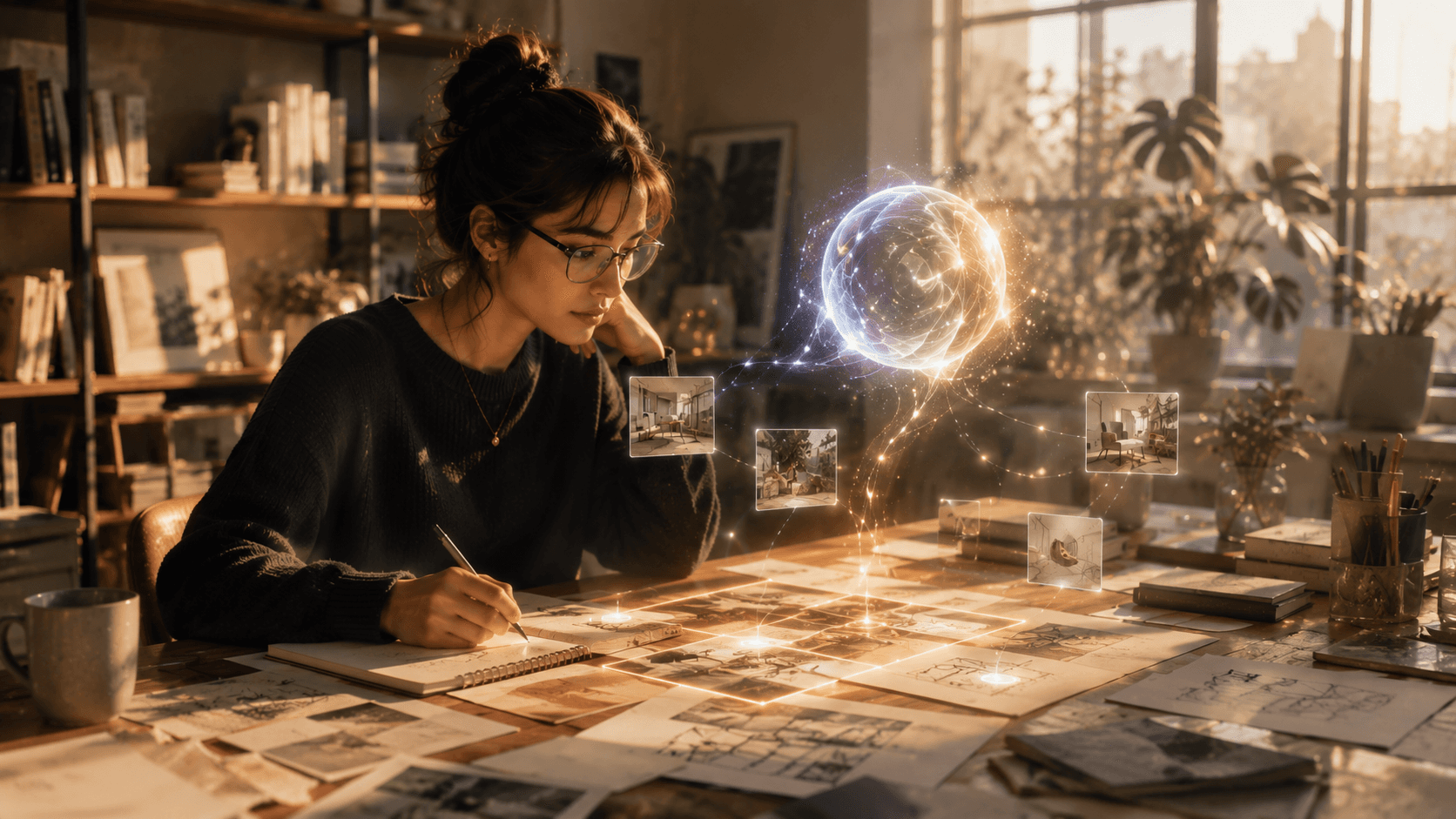
From Light Painting to Spatial Computing
Before I started designing experiences in XR, I was standing in dark fields late at night with a camera.
Armed with little more than a tripod, a flashlight, and a lot of patience, I spent countless hours experimenting with light painting photography. While most people saw darkness, I saw a canvas waiting to be transformed.
At the time, I didn't realize it, but those nights would shape the way I think about design today.
Long before I learned about spatial computing, user experience, or immersive technology, I was already learning how people perceive space.
Learning to Draw with Light
Light painting is unlike traditional photography.
Instead of capturing a moment, you're constructing one.
Every photograph begins with a question:
Where should the viewer look?
How should the eye travel through the frame?
What should remain hidden?
What should be revealed?
Creating a successful light painting image requires thinking beyond a single object. You have to consider the entire environment, how elements relate to one another, and how attention moves through space.
Looking back, many of the principles I use today in XR design began there.
I just didn't know it yet.
Discovering the Third Dimension
Photography taught me how to compose within a frame.
XR introduced a completely different challenge.
What happens when there is no frame?
In traditional media, designers decide what the audience sees.
In immersive environments, users decide where to look.
They can turn around.
Walk away.
Ignore what you intended them to see.
Explore in unexpected ways.
Suddenly, the design isn't confined to a screen.
It exists all around the user.
This shift fascinated me.
For the first time, I wasn't designing for a rectangle.
I was designing for space itself.
From Capturing Worlds to Designing Them
Photography taught me how to observe.
XR taught me how to create.
As I explored immersive technologies through my Master's in Immersive Media Design, I became increasingly interested in the intersection of technology, storytelling, and human behavior.
I began working on projects ranging from educational VR experiences and AR storytelling to systems thinking and spatial interaction design.
What attracted me most wasn't the technology itself.
It was the opportunity to create experiences that felt natural, meaningful, and human.
The challenge was no longer simply building something visually impressive.
The challenge was designing how people would interact with entirely new kinds of environments.
Understanding Human Behavior in Space
The deeper I explored XR, the more I realized that designing immersive experiences is less about technology and more about people.
A headset can track movement.
A device can render realistic graphics.
An AI model can generate information.
But none of these things automatically create a good experience.
The real challenge lies in understanding how humans behave within space.
How do people navigate unfamiliar environments?
How do they discover information?
How do they build trust?
How do they learn new interactions?
These questions continue to drive my work today.
Why I'm Excited About What's Next
Today, my interests have expanded beyond XR itself.
I find myself increasingly drawn toward the convergence of spatial computing, embodied AI, and intelligent systems.
For the first time, we're beginning to imagine digital experiences that don't simply respond to users but actively understand context, collaborate with people, and exist within our environments.
The future of computing may not be limited to screens.
It may not even be limited to interfaces.
Instead, it may involve intelligent systems that share our spaces, understand our intentions, and help us navigate both the physical and digital worlds.
As a designer, that possibility is incredibly exciting.
Looking Back
When I first picked up a camera, I was fascinated by the way light could transform a space.
Years later, that fascination remains unchanged.
The tools are different.
The medium is different.
But the goal is remarkably similar.
Whether I'm creating a light painting photograph or designing an XR experience, I'm still exploring the same fundamental idea:
How can we shape space to create meaningful human experiences?
That question brought me from photography to XR design.
And it's the question that continues to guide me toward whatever comes next.